
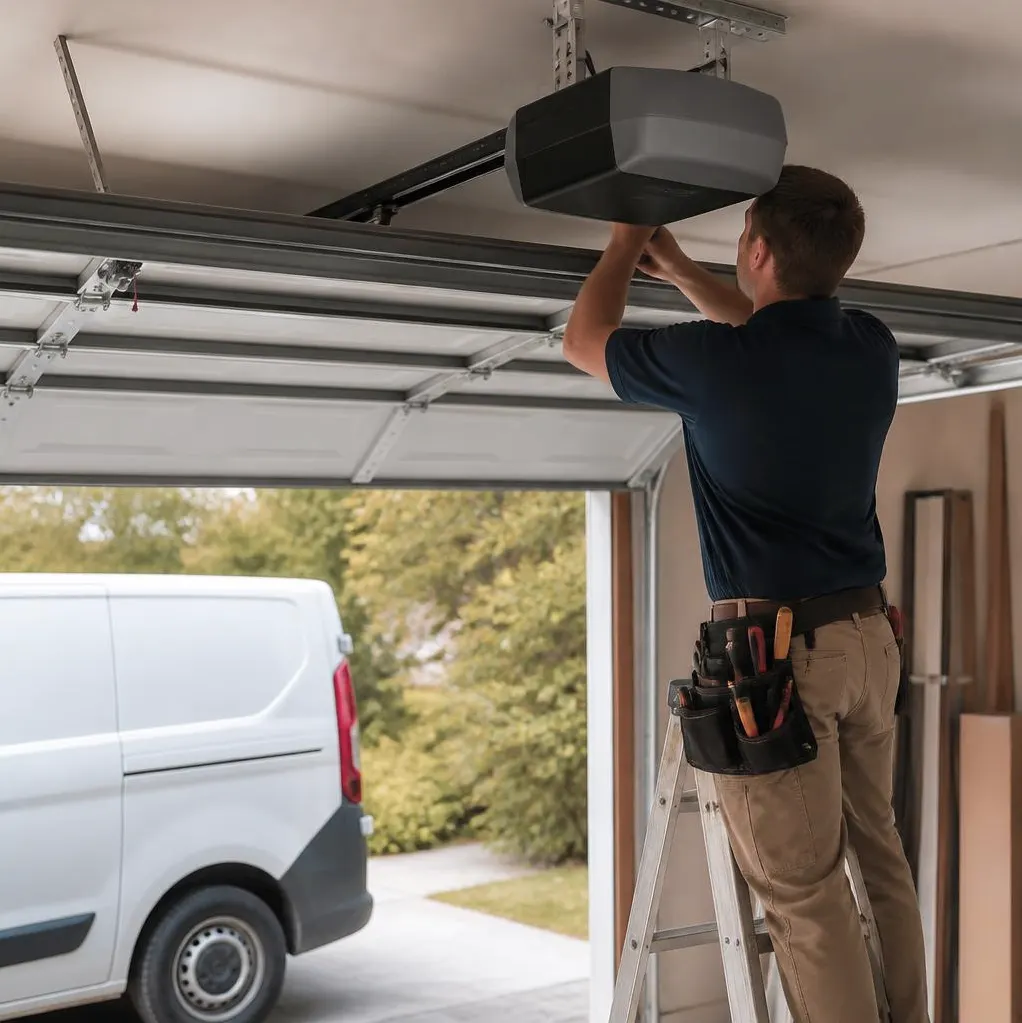
What a technician sees after a storm rolls through
The calls usually start the same way. A storm comes through overnight, the homeowner hears a loud bang or a groan from the garage, and by morning the door is bowed outward like someone pressed a thumb into a soda can. Sometimes it's hail dents across the top two panels. Sometimes the track has pulled away from the wall on one side and the door is hanging crooked. The homeowner is almost always surprised that the garage door took damage before a single window cracked. That surprise is the point of this guide.
Why the garage door is the weakest wall in the house
Every other wall in a typical home is a solid, braced structure. The garage door is a large panel of thin steel, aluminum, or wood sections held in a track and powered by a spring system designed to lift it, not to resist wind pressure pushing against it from outside. When straight-line winds or a sudden gust front hit a closed house, the structure can generally handle the load because air pressure is distributed across solid walls and a braced roof. A garage door with no reinforcement flexes under that same pressure, and once it buckles or blows in, wind rushes into the garage and pressurizes the whole house from the inside. That internal pressure is what pushes up on the roof deck and outward on walls that were never built to be pushed from the inside. A door that fails during a severe wind event doesn't just need a repair the next day — it can be the reason other damage happens at all.
Why this matters more here than in a lot of places
Fort Worth doesn't get hurricanes, but it gets plenty of the same ingredients that cause garage door failures: fast-moving severe thunderstorms with sudden wind gusts, hail that dents panels and chips paint down to bare metal, and blowing dust ahead of a front that works grit into tracks and rollers. None of that is rare here — it's a normal part of the stretch between late summer and late fall, and it comes back again in spring. A door that's already a little loose in the track or running on worn rollers is far more likely to rack sideways and jump the track the first time a real gust hits it.
Reinforcing the door before the next system comes through
- Check the panels for existing dents or warps. A door that's already slightly bowed from an old hail hit has less structural integrity left to resist the next wind load. Minor dents are cosmetic; a warped section that no longer sits flush is a weak point.
- Look at the track and the fasteners holding it to the wall. Tracks that have worked loose from years of vibration or an old impact will let the door rack side to side under wind pressure instead of staying square. Loose lag bolts should be tightened or replaced, not just snugged up.
- Inspect rollers and hinges. Cracked or badly worn rollers let the door wobble in the track, which gets worse under wind load. Nylon rollers in fair shape are usually fine; metal rollers that are rusted or grinding should be swapped out.
- Consider a reinforcement kit for older, lighter doors. Thinner single-layer steel doors built years ago weren't engineered with today's wind-load standards in mind. Retrofit strut kits that bolt horizontally across the back of the door add real rigidity without replacing the whole unit, and they're worth it on a door that's already flexing visibly in strong gusts.
- Don't ignore the springs. A torsion spring that's overdue for replacement is already under strain just from daily lifting. Add the extra stress of a door getting pushed and pulled by wind, and a weak spring is more likely to snap at the worst possible time, leaving the door stuck in whatever position it was in when it failed.
Power, openers, and what to do when a storm is actually happening
Severe storms here often knock out power for a few hours. If the opener has no battery backup, the door is stuck wherever it was left — which is exactly why it should be left fully closed, not cracked for ventilation, before a storm arrives. A closed, latched door resists wind pressure far better than one sitting even a few inches open, since that gap gives wind somewhere to grab. Battery backup units are worth the upgrade for anyone who's been caught needing to get a car out during an outage, but they don't change the advice here: keep it closed when wind and hail are in the forecast.
After the storm passes
Walk out and look before using the opener. Check for dents or buckling across the panels, daylight gaps along the sides where the door meets the frame, a track pulled away from the wall, and debris jammed in the bottom seal. If the door is visibly crooked or came off the track, don't force it with the opener — that's how a bent track turns into a bent panel and a bigger repair.
When to call Fort Worth Garage Door Service
If a door is bowed, racked in the track, or struggling after a wind or hail event, that's a Garage Door Repair call — we'll check the panels, track alignment, and spring condition before anything gets used again and tell you honestly whether it's a repair or a sign the door's at the end of its life. For homes with an older, thinner door that flexes in every strong gust, our Garage Door Installation service can put in a heavier-gauge or reinforced door built for the wind loads this area actually sees. And if it's just been a while since anyone's looked at the track, rollers, and springs, a seasonal Garage Door Maintenance visit before the next system rolls through is the cheapest insurance you'll find.
If your garage door took a hit last storm season or you just want it checked before the next one, call Fort Worth Garage Door Service — proudly serving Fort Worth, Arlington, Haltom City, North Richland Hills, Hurst, Bedford, Euless, and Richland Hills, TX.