
The One-Sentence Rule
If the rust is only on the surface and the metal still feels solid when you tap it with a screwdriver handle, it's a touch-up job; if the metal flakes away, crumbles, or the door binds and sticks when it moves, you're looking at a replacement part, not a weekend fix. That one line settles most kitchen-table arguments, but there are enough exceptions to make it worth reading past the headline.
Why This Argument Happens in the First Place
One spouse sees a few orange spots near the bottom panel and figures a wire brush and a can of spray paint will handle it. The other sees the same spots and starts pricing new doors. Both reactions make sense — because "rust" and "moisture damage" aren't one problem, they're several different problems that happen to look similar from six feet away.
Surface Rust (the Cosmetic Kind)
This is the thin, reddish-brown dusting that shows up where paint has chipped or scratched, usually from lawn equipment, a bike pedal, or road salt tracked in during an ice event. It sits on top of the metal and hasn't eaten into it yet. You can sand it lightly, prime the bare spot, and repaint. Done right, this holds for years.
Structural Rust (the Expensive Kind)
This is different: it's rust that has worked all the way through the steel, usually along the bottom panel where standing water sits after a storm, or around the hinges where moisture gets trapped and never fully dries between rain events. If you can push a fingernail through a spot, or you see rust-colored streaks running down from a hinge or track bracket, the metal itself is compromised. Paint won't fix that — the panel or hardware needs to be replaced.
Swelling: Usually a Wood Problem, Not a Steel One
If your door (or door trim) is wood or wood composite, swelling is the real argument-starter. Wood soaks up humidity, swells at the bottom edge and along panel joints, then shrinks back down as it dries out. Do that enough times — through a humid summer and a few sudden storms — and the wood starts to warp, the joints separate, and paint cracks along the seams. A door that used to close flush now drags on the frame or leaves a gap at the bottom. That's not rust at all; it's moisture cycling in and out of the wood fibers, and repainting alone won't stop it. The fix is usually re-sealing all exposed edges (including the top and bottom, which get skipped) or, if the warping is bad, replacing the affected section.
What Actually Causes Most of This Locally
- Standing water at the bottom panel — from poor grading, a cracked driveway apron, or debris blocking drainage after a hard rain
- Hail dings that chip paint and expose bare steel, which then rusts from the inside out over a season or two
- Humidity swings between hot, muggy summer days and cooler, wetter fall and winter weather, which is exactly what drives wood swelling
- Dust and grit mixing with moisture in the tracks and rollers, holding dampness against metal parts longer than it should sit
- Occasional ice that melts and refreezes at the bottom seal, pushing water up under the weatherstripping
A Quick Test You Can Do Together
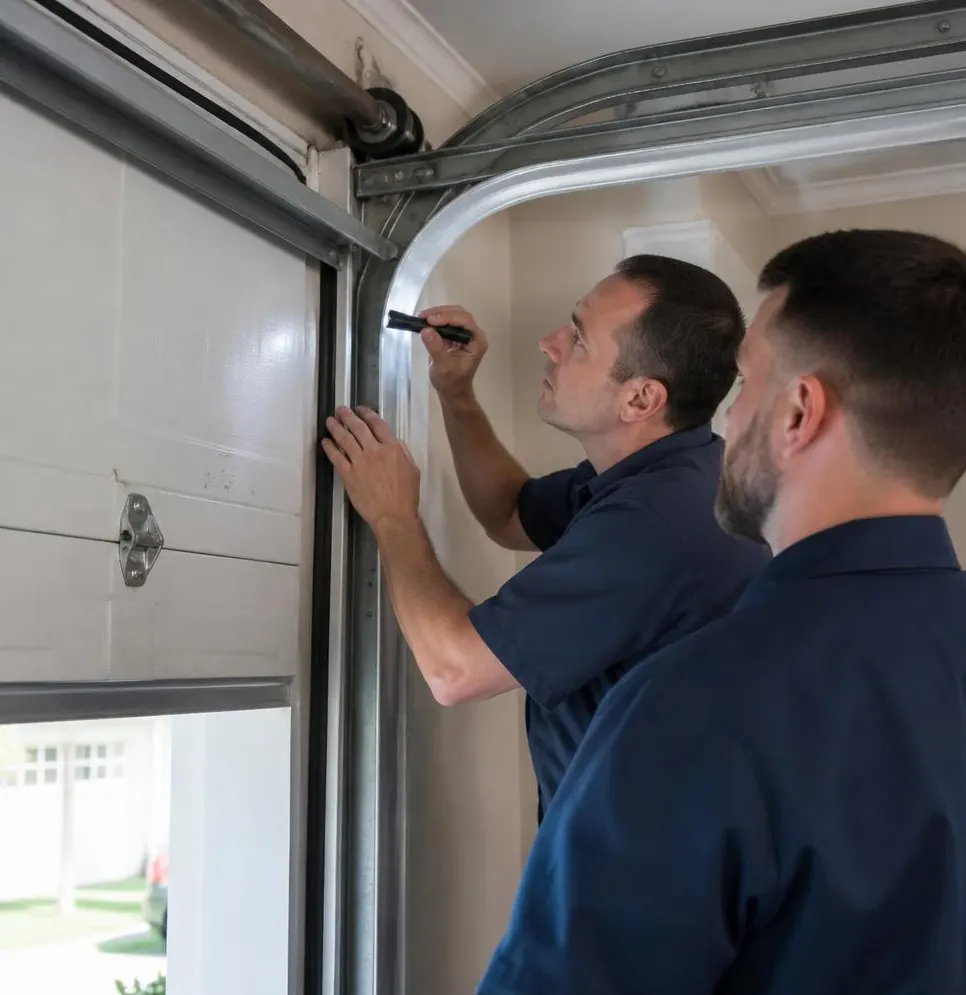
- Open the door fully and run a flashlight along the bottom 12 inches of each panel, inside and out.
- Press a screwdriver tip firmly against any rust spot or soft-looking wood. If it sinks in or crumbles, that's structural, not cosmetic.
- Check the weatherstripping at the bottom — if it's cracked, flattened, or pulled loose, water has probably been getting underneath it for a while.
- Look at the hinges and track brackets for streaking or pitting, which usually shows up before the panel itself fails.
Whoever's test holds up wins the argument — but either way, the fix is usually smaller than a full door replacement.
When to Call Fort Worth Garage Door Service
If your walk-through turns up soft wood, flaking metal, or a door that's started dragging or sticking, that's the point to stop debating and get it looked at. We handle both garage door repair for isolated rust or water damage and full garage door maintenance visits that catch these problems before they spread — resealing panel edges, replacing worn weatherstripping, and checking drainage around the slab. For panels too far gone to save, we can source a matching replacement instead of swapping the whole door.
If you're in Fort Worth, Arlington, Haltom City, North Richland Hills, Hurst, Bedford, Euless, or Richland Hills and want a second opinion before winter rain and ice make the problem worse, give Fort Worth Garage Door Service a call. We'll settle the argument for you — and fix whichever one of you turns out to be right.